 Mostafa Ashraf

Multiple Vulnerabilities on E-Commerce (Password Reset + 3 IDORs)
Hello, In this writeup I’m going to talk about multiple vulnerabilities I found on ecommerce.com, an e-commerce app for used products where users can add items to cart, buy them, or bid on live auctions.
in this writeup i have 4 bugs: one password reset token issue, and three different IDORs
Target:
let’s call our target ecommerce.com
Bug 1: Password Reset Token Doesn’t Expire
i started testing the main auth functions: sign-in, sign-up, password reset, and OAuth
while testing password reset i noticed something interesting, the reset token doesn’t expire until a new one is requested
so i decided to dig deeper, i changed the email address on one of my test accounts, then tried to use the OLD reset token again
and guess what? it worked!
Attack Scenario
so i built a realistic scenario out of this:
- victim creates an account, and receives a reset/create password link on their registered email
- victim changes their email to a new one (e.g from
victim@old.comtovictim@new.com) - attacker, who already has access to
victim@old.com, still has the old reset link - attacker uses that old link to reset the password
- attacker successfully takes over the victim’s account
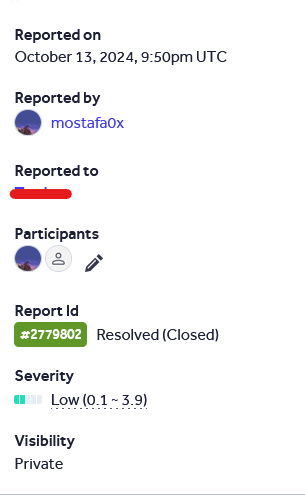
at first i thought they would close it as informative/N-A, but they accepted it as Low severity, the scenario was realistic enough to make sense to them
Bug 2: Cancel Any User’s Purchase via IDOR
after a couple of days i moved to testing other functions: add to cart, complete order, and view purchases
how the purchase flow works
- user adds a product to cart
- user clicks complete order
- the product moves to the purchases list, and the user has to pay for it, otherwise the account could get blocked for having uncommitted purchases
Discovery
before payment, a POST request is sent to
/api/webapi/shopping/ordercheckout/createuncommittedpurchaseorderthis marks the order as uncommitted until payment happens
if this request is sent more than once: - the purchase disappears from the account, so it can’t be paid for later
- after a while, the account gets blocked for having too many uncommitted purchases
so i created an order on my second account and replaced thepurchaseOrderIdwith the one belonging to the first account
and it worked, i canceled the other account’s purchaseBypassing the GUID/UUID Policy
but there was a catch, the program’s policy states that any IDOR depending on a GUID/UUID gets downgraded to Low severity
so i challenged myself to find something better
i crawled the site, went through the purchasing flow as a regular user, and checked my Burp history
i searched forpurchaseOrderIdand found another vulnerable parameter tied to it
how i got the purchaseOrderId:
when you attempt to purchase a product, atransactionIdis generated and tied to thepurchaseOrderId, when completing the purchase, the app sends a GET request with thetransactionIdto retrieve thepurchaseOrderId, then uses it to complete the processAttack Scenario
- write a simple python script (or use Burp Intruder) to brute force valid
transactionIdvalues (0 to 999999999) - retrieve all corresponding
purchaseOrderIds - uncommit/cancel any purchase order on
ecommerce.com, for any userImpact
- attacker can cancel any purchase for any user without their knowledge
- attacker can spam this behavior to get random users’ accounts blocked
i initially thought account blocking was fully automated based on uncommitted purchases, but the team clarified it’s controlled manually on their endResult
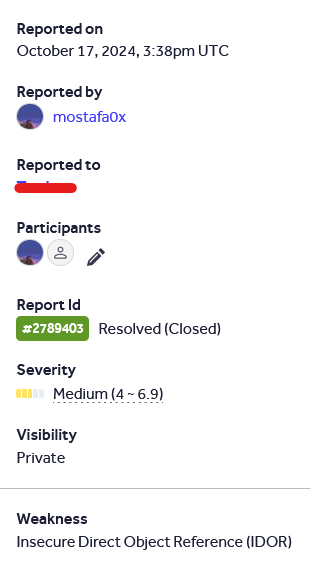
we reported this as Critical, they accepted it as Medium, still a solid finding
Bug 3: IDOR via cartId Allows Viewing/Modifying Victim’s Cart
while testing the cart functionality i noticed the cartId parameter is trusted without checking who actually owns it
Attack Scenario
- attacker has the victim’s
cartId - attacker performs a normal action on their own cart (add, remove, or view), intercepting the request with Burp Suite and sending it to Repeater
- attacker replaces their own
cartIdin the intercepted request with the victim’scartId - attacker successfully adds to, removes from, or views the contents of the victim’s cart by sending the modified request
Impact
- attacker can view a victim’s private cart contents
- attacker can add unwanted items or remove items from a victim’s cart without their knowledge
Bug 4: IDOR on /cartoverview/ Endpoint
i found another related issue on a different endpoint that handles cart overview, /api/webapi/shopping/checkout/cartoverview/<cartId>, it has improper access control checks on the cart identifier
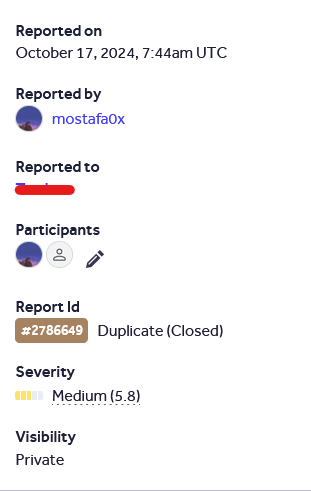
Same impact as Bug 3, and it was also a duplicate.
I hope you enjoyed my writeup — see you soon!
—